Digital Literacy · Demo Day · Kyrgyzpatent
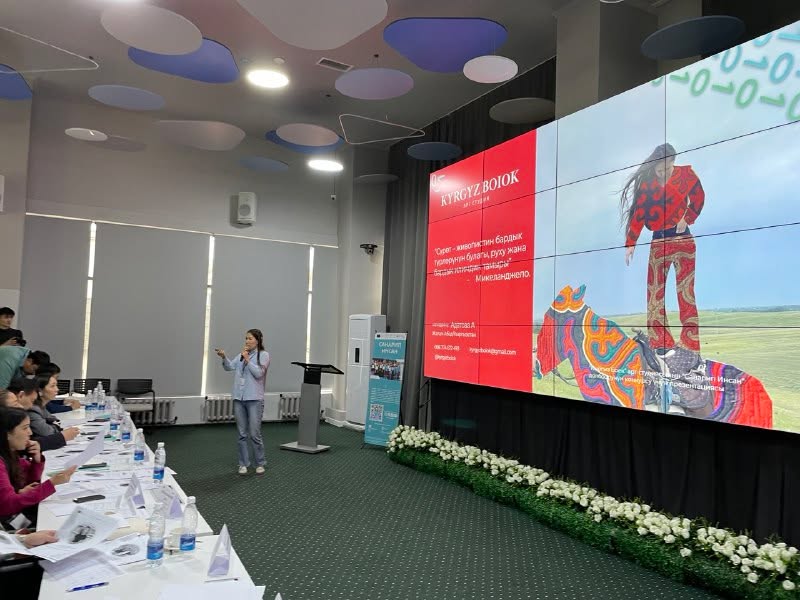
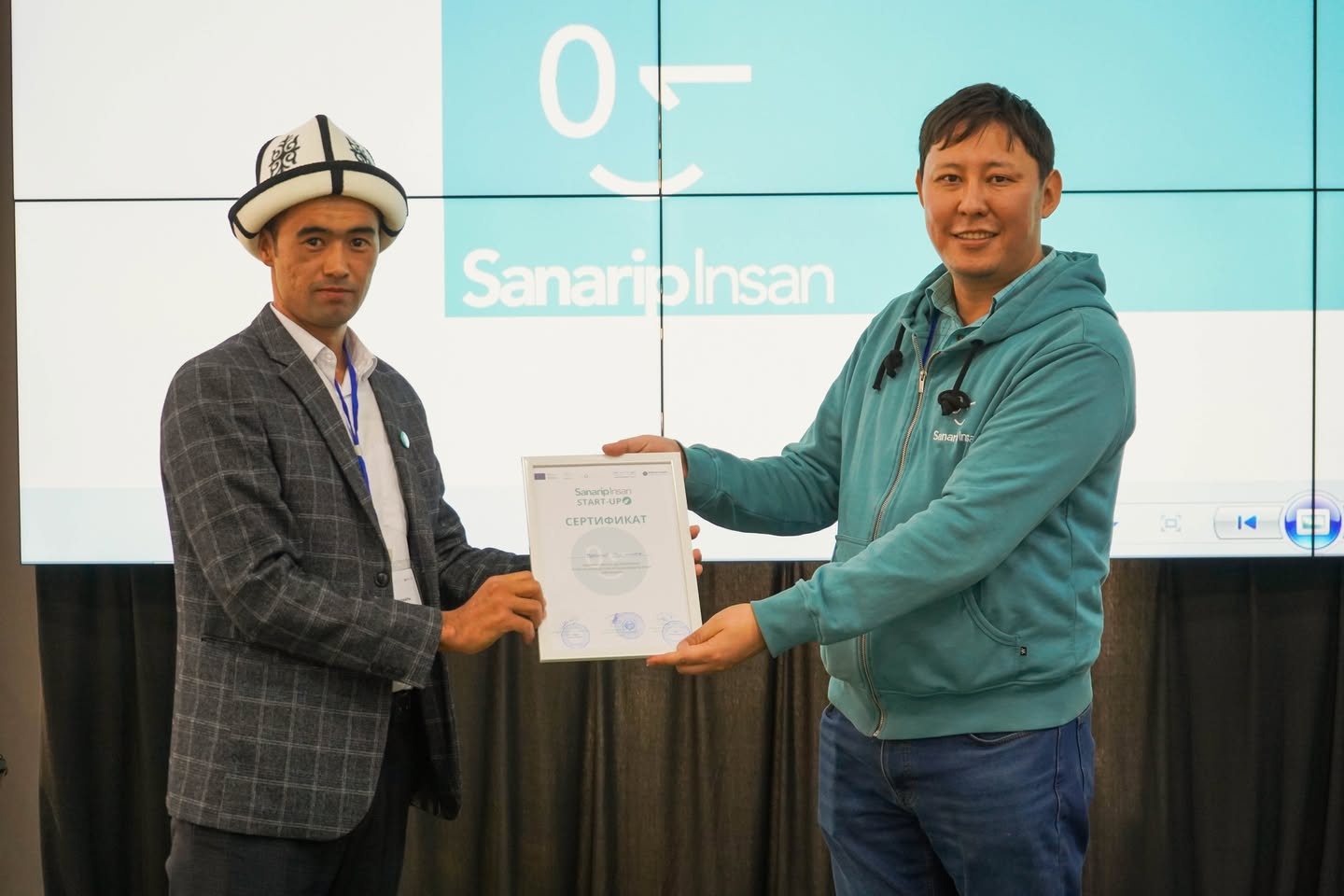
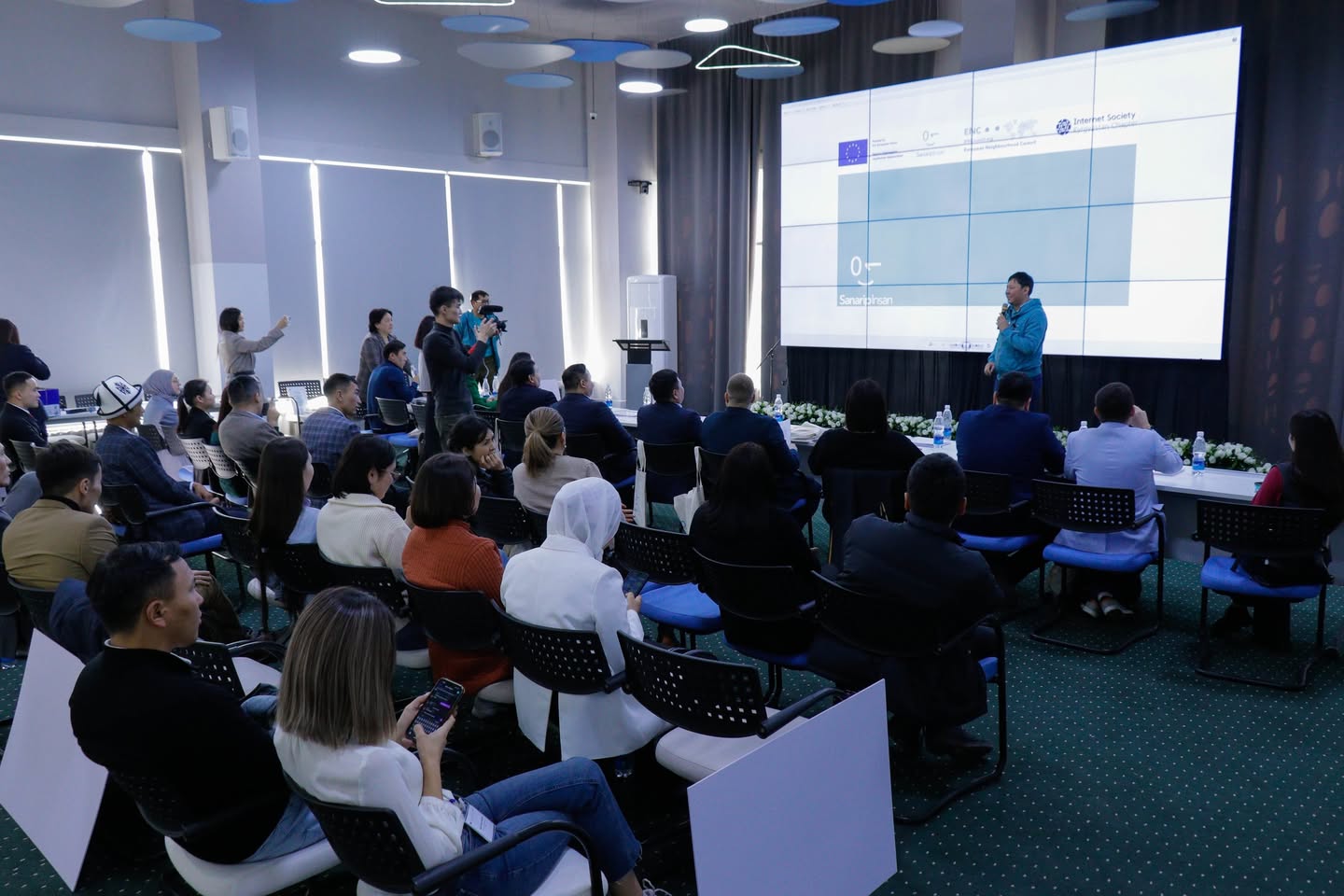
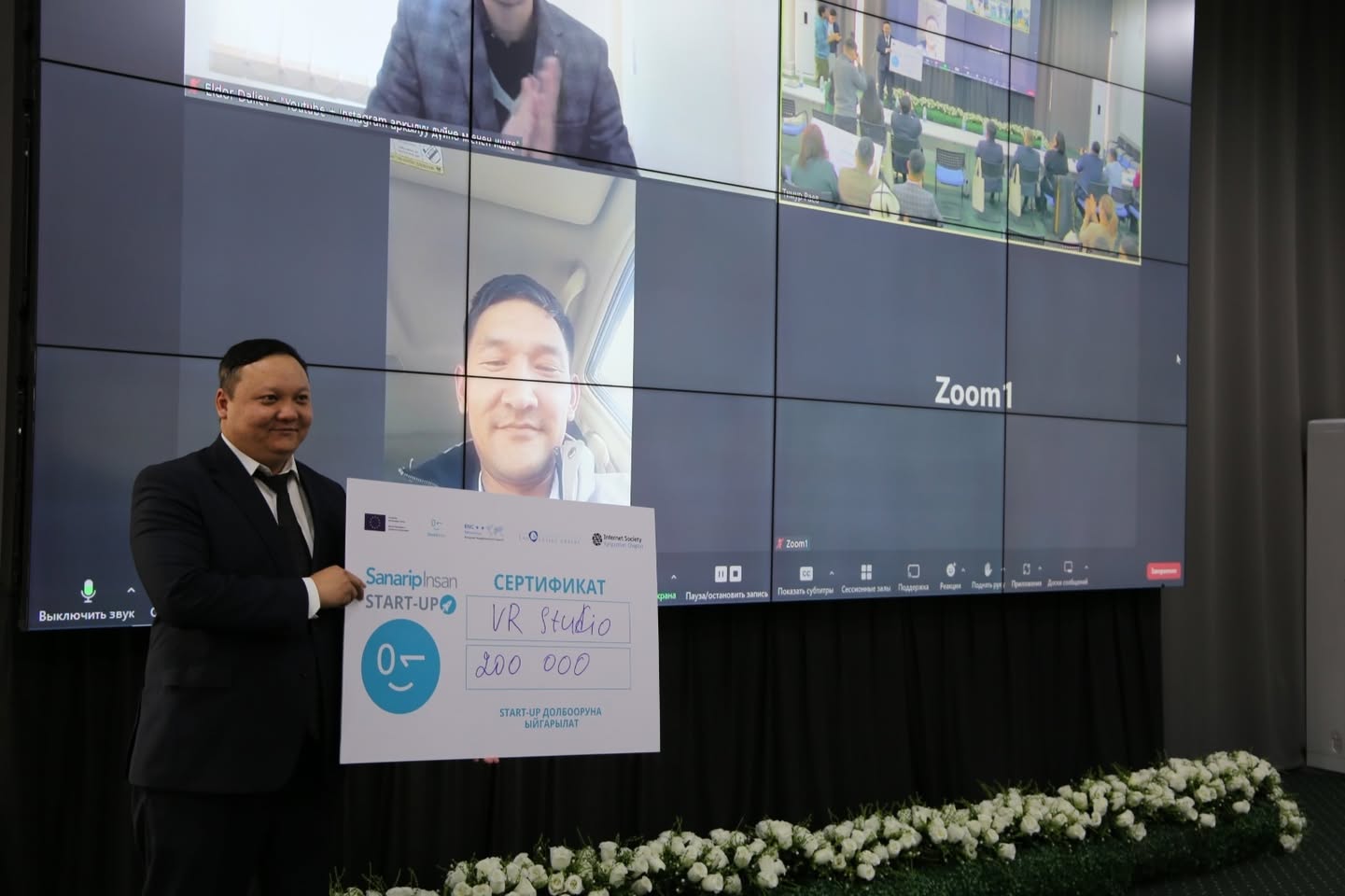
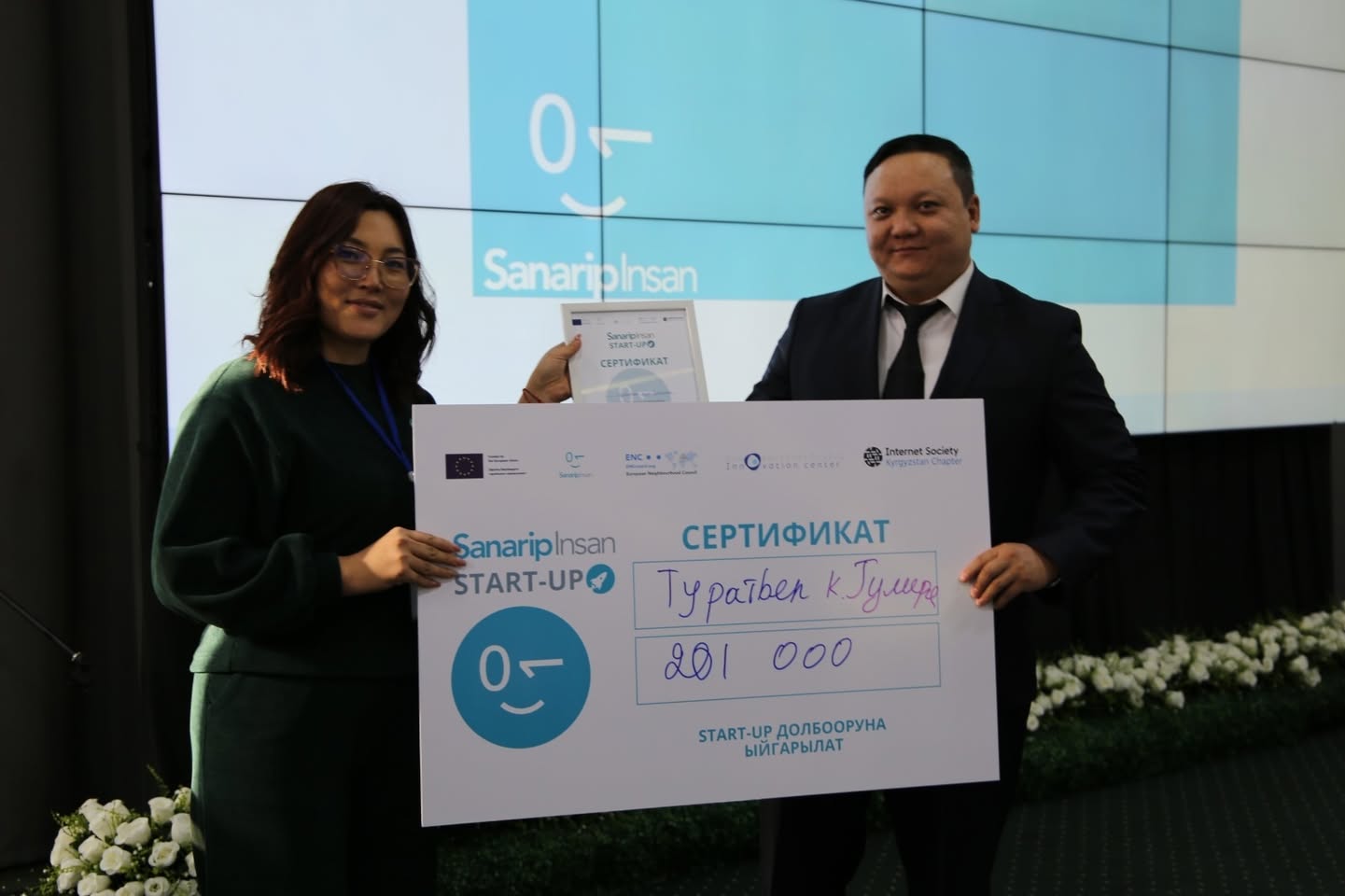
On 10 November 2023, at the Innovation Centre of Kyrgyzpatent, the Sanarip Insan project’s final Demo Day brought 22 selected startups in front of the jury. Three deputy ministers handed out the awards. The format worked because it sat on top of a decade of KG Labs hackathons, acceleration programmes, and pitch-judging done across Kyrgyzstan and the wider region.
2023-11-11 · Aziz Soltobaev · KG Labs Foundation
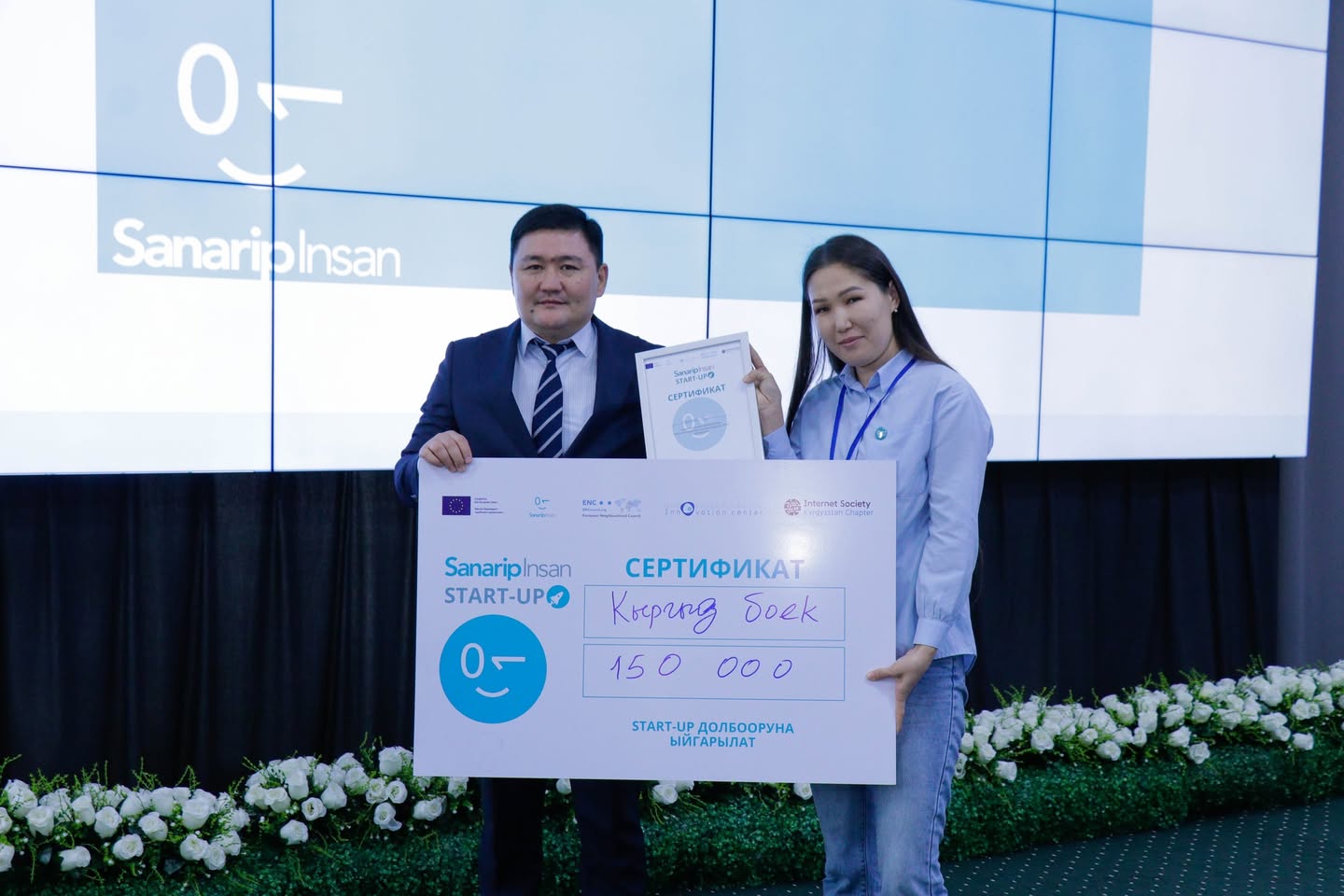
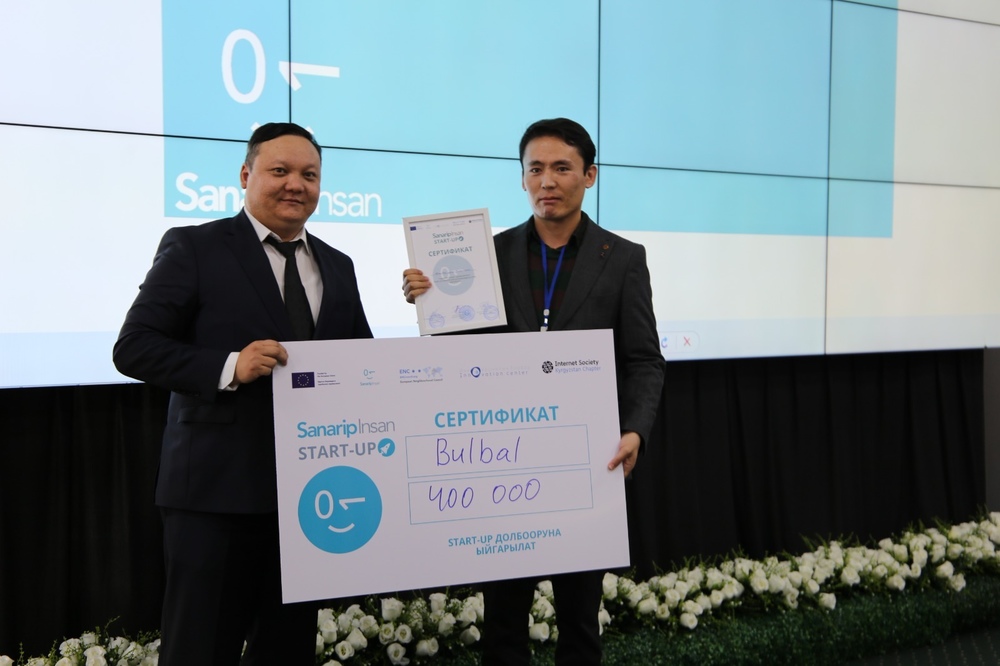
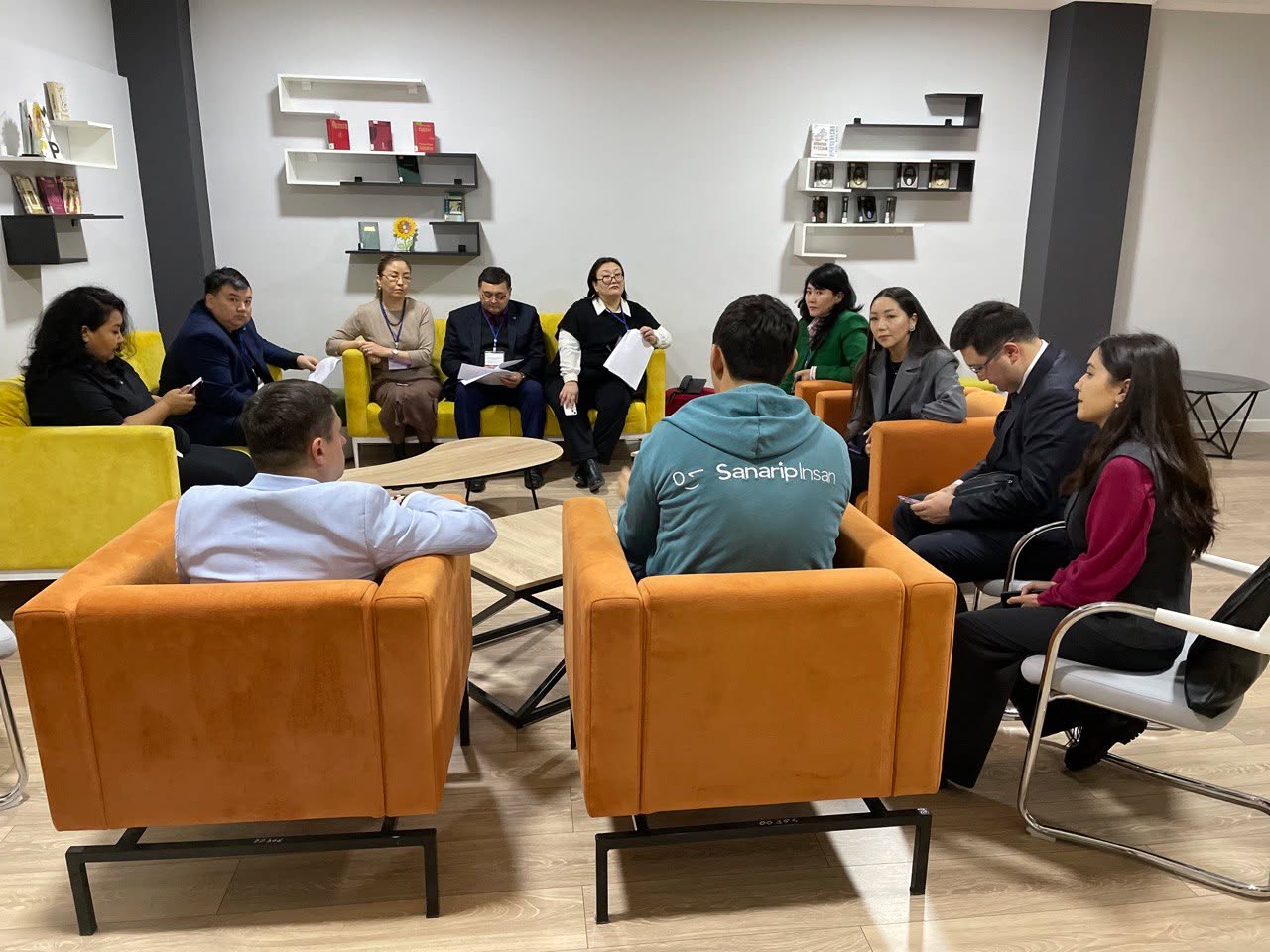
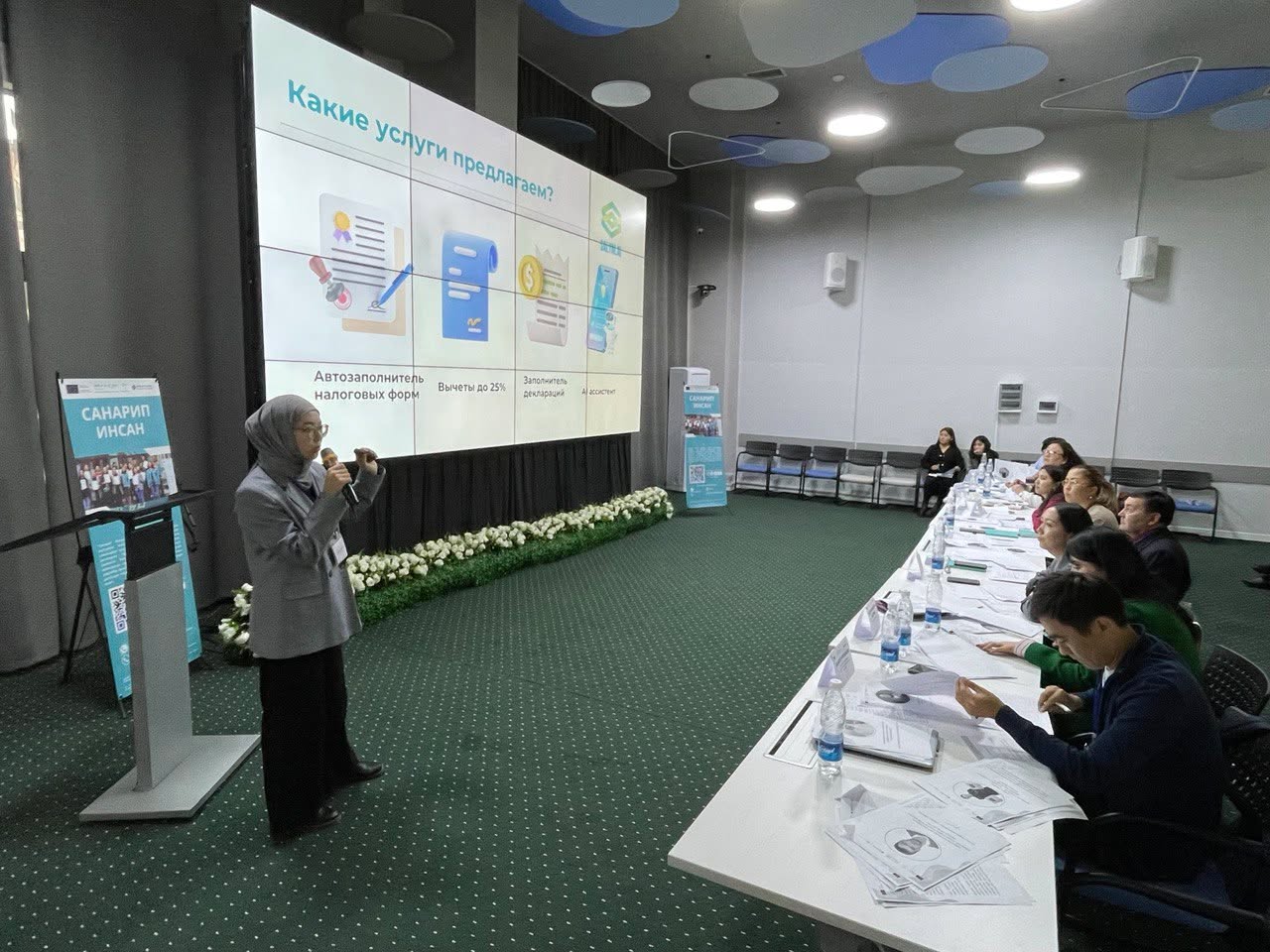
On 10 November 2023, in the halls of the Innovation Centre of Kyrgyzpatent — the State Agency of Intellectual Property and Innovations — the Sanarip Insan project held its final Demonstration Day. Twenty-two pre-selected teams of early-stage entrepreneurs pitched their projects to a jury for a grant of up to five hundred thousand som, equivalent to around five and a half thousand euros. The total prize fund on the day was over 2.6 million som.
I want to write about the Demo Day, and I also want to write about the back-story most people in the room would not have seen. The Demo Day did not work because it was a good idea on the day. It worked because the format had been refined across a decade of KG Labs hackathons, acceleration programmes, mentor sessions, and judging panels — most of which never made it onto a results page.
What was on the day
The Sanarip Insan project is funded by the European Union in Kyrgyzstan and is investing in the country’s young people and women. From the 168 startup applications we received, the jury panel had selected 22 to advance — projects across digital education, digital tourism, e-commerce, and the application of artificial-intelligence technologies across different sectors of life in Kyrgyzstan. The 22 finalists had also been through an additional acceleration programme run by Devcit Accelerator before standing up in front of the jury.
It is worth being concrete about what a 2.6-million-som prize fund means in this context. Five hundred thousand som — five and a half thousand euros — is not a seed round in the sense the term is used in Bishkek’s accelerator language. It is, for a Batken-based or Aksy-based or Naryn-based entrepreneur, the difference between an idea staying as a side project and that idea getting its first product version out. It funds the initial inventory, or the first three months of a founder’s time, or the legal registration plus the website plus the first paid customer-acquisition cycle. It does not solve the funding ladder. It opens its first rung.
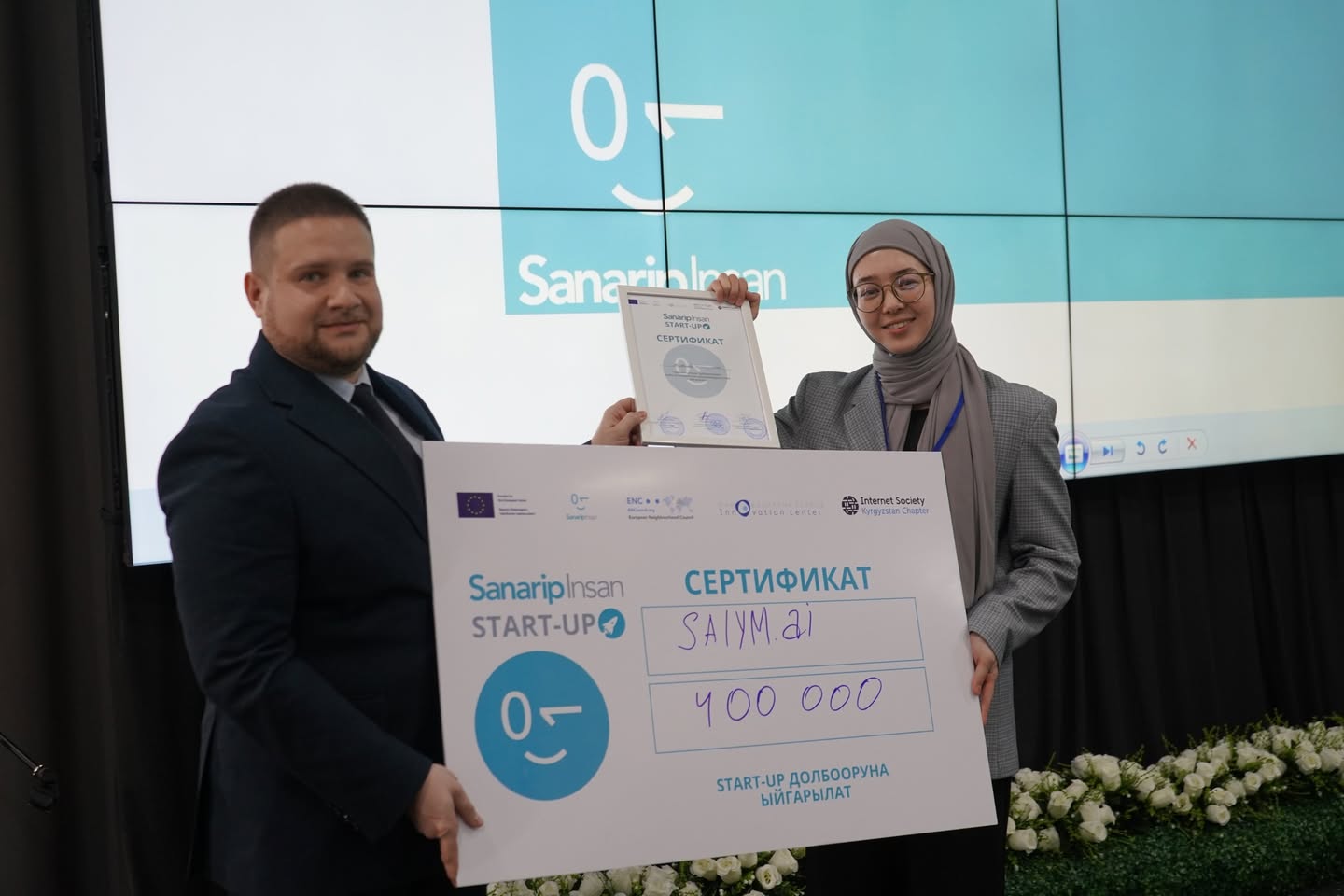
The fact that three deputy ministers — Social Development, Digital Development, and Education and Science — handed prizes on the day is the other part to record. The Sanarip Insan project sits across all three of their portfolios. Having all three of them at the same Demo Day, presenting awards in person to entrepreneurs from oblasts that rarely figure in Bishkek startup events, said something about how the project’s audience is understood by the government.
The KG Labs back-story the room did not see
The reason the Demo Day worked the way it did — the Shark Tank format that kept the room awake, the rubric the jury used, the way the pitches were structured, the way the prize amounts were tiered — was not invented for Sanarip Insan. It was the accumulated craft of roughly a decade of doing this kind of work, mostly under the KG Labs banner, with collaborators who had become long-term partners along the way.
Some of the threads that fed into the Sanarip Insan Demo Day:
- Garage48 with KG Labs, Bishkek, 2015. The Estonian hackathon format introduced to Kyrgyzstan with mentor support from Tallinn. The format taught us what a 48-hour cycle does to a team — and what kind of pitch structure survives at the end of it.
- The 2016 KG Labs tourism hackathon. Mentors from Estonia and Russia, including Leonid Pustov from the Russian travel-startup community. The format from that hackathon is still in use seven years later across Central Asia.
- The 2018 Ecosystem Tours. I spent weeks visiting regional ecosystems, sitting in pitch sessions, judging, mentoring — the part of the work that does not show on a CV but trains your eye for what makes a pitch land.
- The Demand-Supply research on the Kyrgyz IT sector, 2018. Acceleration programme design has to start from what the market actually demands. Without that research baseline, prize money lands on the wrong projects.
- The 2019 GIZ Fintech-Ecommerce Hackathon. Larger-scale German-funded programme, multi-team, multi-week structure. That is where the multi-week acceleration plus single-day Demo Day rhythm got worked out.
- The 2022 KG Labs e-commerce accelerator with PEAK Kyrgyzstan and DFID. A six-week programme where participants closed 6 million som ($74,300) in deals — honey to Europe, sewn goods, vegan sausage, sumolok export. The criteria for “did this acceleration actually move the needle?” came out of measurements made in that programme.
- Mentor and judging work at Ololo across multiple years. The creative-class side of the Bishkek ecosystem; the conversations there about how to evaluate a non-tech project under tech-startup rubrics.
That is the partial list. The full list is longer. The point of writing it down is that the Sanarip Insan Demo Day was not standalone. It was the formal closing event of a 30-month EU-funded project, and the 30 months sat inside roughly a decade of testing, refining, and copying-from-others the elements that go into a competition that actually identifies the projects worth funding.
Most of that earlier work was never written up on a results page. A lot of it was unpaid mentor time, judging panels at other people’s events, advisory conversations with regional accelerators in Almaty and Tashkent and Dushanbe. None of it would survive a balance-sheet review. All of it shows up in the way a Demo Day like the one at Kyrgyzpatent runs cleanly.
The winners worth naming
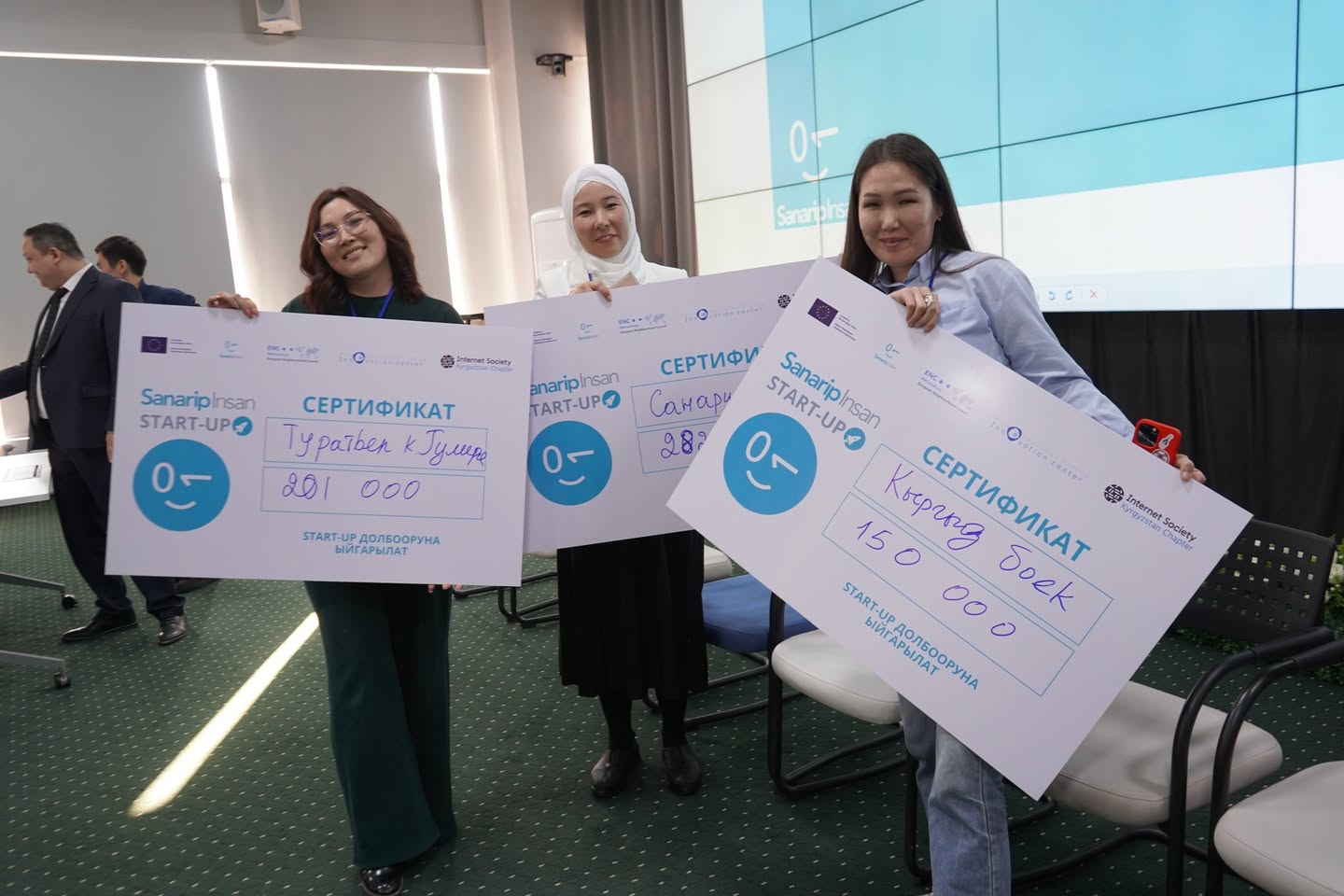
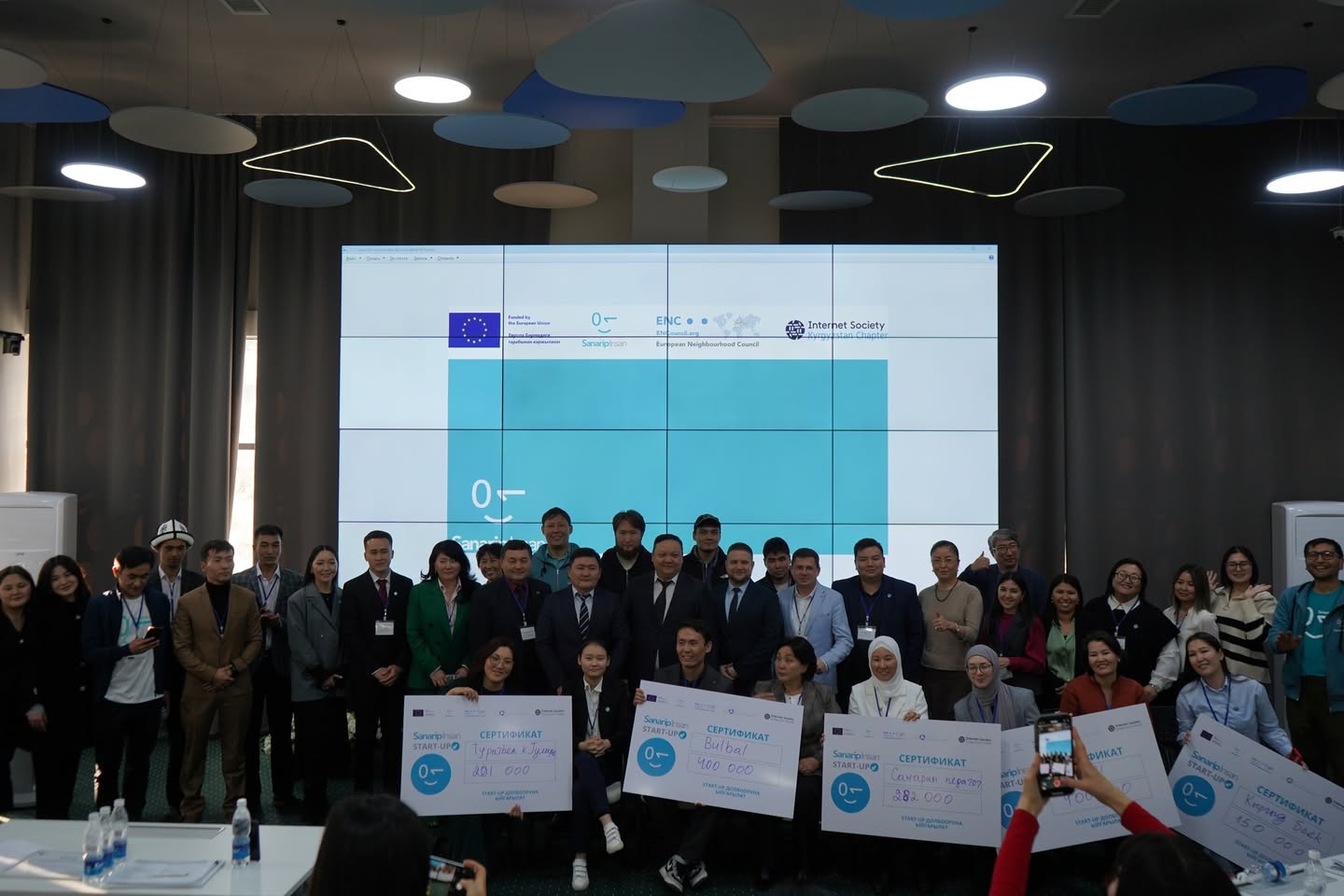
What the finalists were building
I do not want to write a comprehensive list, because a comprehensive list of 22 finalists is not what a witness-voice post is for. The categories give the shape:
- Digital education — projects building local-language teaching tools, including for subjects where the existing materials are imported and not contextual.
- Digital tourism — listings, route discovery, language tooling for guesthouses in Sary-Chelek, Aksy, Talas, Naryn that have historically been invisible to Booking.com and Airbnb because they sit outside the gazetteer.
- E-commerce — small producers — honey, sewn goods, sumolok, vegan sausage brands — looking at marketplace presence on Wildberries, Ozon, and direct export channels.
- AI applications — including SalymAI’s tax-assistant prototype, which won the digital-development award, and a number of more domain-specific ideas at earlier stages.
These are not Y Combinator companies. They are people from villages who have built a working prototype in the field they actually work in. Each of them had a story about why they applied to Sanarip Insan instead of one of the more conventional startup tracks — usually because the conventional tracks did not see them, or did not have a category that fit, or required English-language pitch materials they were not ready to produce.
The KG Labs view on this has always been that the structural unfairness in the Bishkek startup ecosystem is not on the technical side. It is on the filtering side — who gets seen by a jury, whose project lands inside a category the jury recognises, whose presentation style reads as serious to people raised on Y Combinator videos. A well-run Demo Day fixes the filtering, not the technology. That is what the Kyrgyzpatent room on 10 November was doing.
What was on the table beyond the prizes
The acceleration component of Sanarip Insan ran for 30 months and is — at the time of the Demo Day — coming to its formal close. The project was implemented by Internet Society Kyrgyzstan Chapter together with European Neighborhood Councils, funded by the European Union. Its full result picture goes beyond the Demo Day, and there is a separate piece I have written about the project’s effect at the level of its targeted users, where the original ambitions and the actual outcomes diverged in ways that are worth being honest about: Sanarip Insan, 30 months in: I was wrong about which numbers mattered.
For the day itself, the formal records are at:
- ISOC KG project page: https://isoc.kg/sanaripinsan/
- SalymAI: http://salym.ai/
- Instagram coverage of the Demo Day: https://www.instagram.com/p/CzgOItHKdtq/
- Kyrgyz-language coverage: http://kg.kabar.kg/news/evrobirimdiktin-sanarip-insan-dolbooru-zhashtardyn-s-p-n-g-s-n-salym-koshuuda/
The remaining photographs from the day are below.