
DPI · GovStack · Central Asian Digital Forum
On 12-13 November in Bishkek, I presented our 20-metric assessment of Kyrgyzstan’s digital public infrastructure. The transaction volume through Tündük is growing — but the queries are concentrated in a narrow band, and inter-ministry exchange is still being done manually.
2024-11-17 · Aziz Soltobaev · KG Labs Foundation
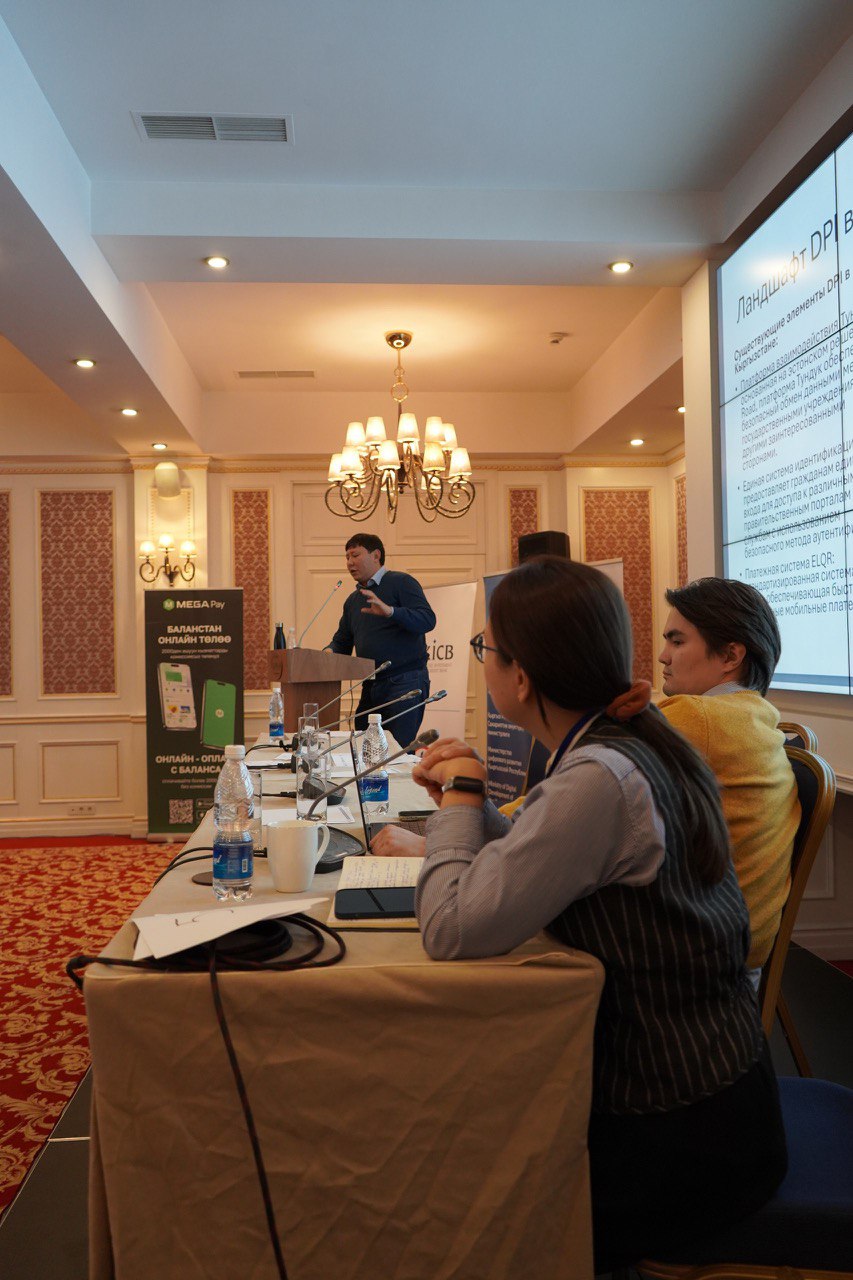
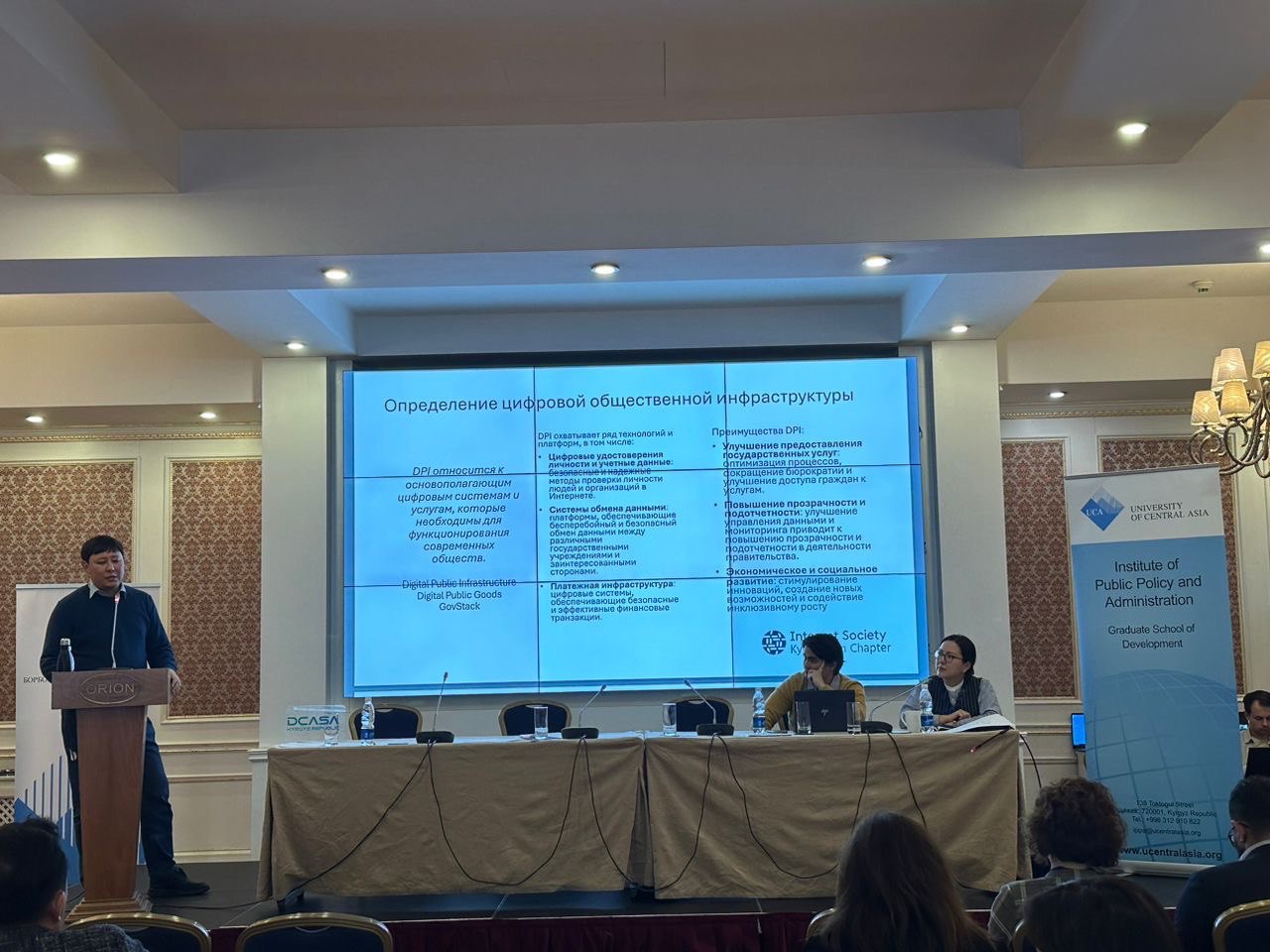
This past week I delivered a presentation on the role of Digital Public Infrastructure, Digital Public Goods, and GovStack in the next stage of the digital transformation of countries, using Kyrgyzstan as the worked example. The Central Asian Digital Forum took place on 12-13 November in Bishkek.
DPI, DPG, and GovStack are relatively new terms, but they are increasingly load-bearing in any serious discussion about how governments accelerate the delivery of public services. The presentation drew on our assessment of the current Digital Public Infrastructure landscape in Kyrgyzstan, structured around twenty metrics, plus a more detailed read on the education sector.
One finding worth surfacing
Of the twenty metrics, the one I want to surface in writing is this. The number of transactions — the volume of data exchange — through the Tündük platform is growing year on year. But the predominant majority of requests, both from state organisations and from private organisations, are concentrated on a narrow circle of records and documents from one issuing body: the State Registration Service.
In other words: Tündük is being used. It is also being used inside a very specific corner of what it could be doing. Inter-ministry interaction and data exchange — the part where the largest efficiency gains live — remain at an extremely low level. The demand for cross-ministry data exchange exists today and is real; those requests are still being processed by hand, although they are now being sent electronically, via the Infodox system.
That is the bottleneck. The hard part is not the technology. The technology — X-Road, which Tündük is built on — handles cross-ministry exchange comfortably. The hard part is the institutional permission, the standardised data dictionaries, and the process redesign that lets one ministry’s clerk trust another ministry’s record without re-keying it.
Why I framed it through Wardley mapping
The framework I used to present this in Bishkek was Wardley mapping — placing each component of the DPI on a map by its evolutionary stage (genesis, custom-built, product, utility) and by its position in the user value chain. Plus the DPI metrics rubric on top.
The point of the exercise is not academic. It is to give the people who allocate capital — government, donor, commercial — a way to see which components are ready to be treated as utilities (you don’t optimise utilities, you consume them) and which are still in the product or custom-built stage (where investment changes the trajectory).
In Kyrgyzstan, identity is a utility now. Payments are nearly there. Data exchange — the Tündük capability — is a product that is being used as a utility for one issuer’s records, which is the wrong shape. The country can make a significant leap, comparable in significance to how convenient mobile services became after the original Tündük (X-Road) rollout, by re-shaping data exchange as the cross-ministry utility it was designed to be.
What the audience took back
The audience at the Central Asian Digital Forum was regional — Kazakhstan, Uzbekistan, Tajikistan, and Kyrgyzstan, with delegates from international institutions present. The Kyrgyz situation is not unique. The other Central Asian countries are at slightly different points along the same axis. The framing — DPI as foundation, DPG as the licensable building blocks, GovStack as the implementation reference — translates across all four.
What I want to take from the Forum into the next phase of the assessment is the validation that the bottleneck is not the technology. The technology exists, has been operating for years, and works. The next phase of the work is institutional — the data dictionaries, the consent framework, the process redesign — and that is where the next round of effort and funding will produce the biggest gains for households.
Where this report is going
The 20-metric DPI assessment, the sector deep-dive on education (with the Karakol focus-group input), and the related infrastructure work are heading into a public report. The audience is government, the donor community, and regional commercial operators. The report will sit in service of the broader argument that the next phase of digital transformation in Central Asia depends on getting the inter-ministerial data exchange to actually carry traffic, not just to be available to carry traffic.
That is the work I plan to keep arguing for.