
The deliverable I signed off to ITC in February 2021, under project B723 of the Ready4Trade Central Asia programme, was titled «E-commerce market potential and opportunities for Kyrgyzstan SMEs in priority markets.» Two industries — handicrafts and textiles. Five priority markets — Northern America, the European Union, Russia, China, the rest of Central Asia. Several months of research, marketplace platform analysis, keyword work on Google, Yandex Wordstat, Serpstat, Sellics, Etsy’s own search tools, and a long-form report that ITC’s certifying officer accepted as completed work.
This post is what that research found and why it matters — named findings, in the order I reached them rather than the order they appear in the report.
What was being asked
The Ready4Trade research question was practical: which Kyrgyz SMEs could realistically sell through international e-commerce platforms in the next three to five years, and which platforms should they target? ITC had identified handicrafts and textiles as the two priority sectors for Kyrgyzstan — handicrafts because of the rural-women-artisans angle and the high-margin cultural-product potential, textiles because of the demonstrated $150-million-plus annual export volume to Russia in the years before the pandemic.
The pandemic was the immediate context. Kyrgyz SMEs had lost their main 2020 sales channels — international exhibitions, B2B factory tours, in-person wholesale meetings, tourist foot traffic for handicrafts. The hypothesis behind the research was that the missing revenue could be partially recovered through e-commerce — if the right products, the right platforms, and the right operational stack could be matched up.
What the research found
Three findings landed with the most weight. I will name them in the order I reached them rather than the order they appear in the final report.
One: six hundred and sixty-two Etsy listings for «Kyrgyzstan,» sold by no one in Kyrgyzstan
Searching Etsy for the keyword Kyrgyzstan in January 2021 returned 662 product listings. Felt slippers, shyrdaks, embroidered pieces, traditional toys, dried-fruit assortments, coins, banknotes, maps. The catalogue was real. The merchants selling that catalogue were all registered in the United States, the United Kingdom, and Germany. None of them was based in Kyrgyzstan.
The reason is not what most people guess. It is not that Kyrgyz artisans cannot make the products — they manifestly do, because the products are on the shelves, made by them, being sold under someone else’s storefront. The reason is that Etsy’s supported payment systems — PayPal, Stripe, and a short list of others — do not operate in Kyrgyzstan. The National Bank of the Kyrgyz Republic requires international fintech companies to register locally and open bank accounts inside the country before they can process transactions involving Kyrgyz residents. PayPal, Stripe, and Revolut had not done that. Without those rails, no Kyrgyz artisan could register as a merchant on Etsy and receive payment for an order from a US buyer.
That regulatory choice — to require domestic registration of foreign fintech operators — is defensible as a financial-stability measure. Its e-commerce consequence is that the entire value capture of the Etsy-listed Kyrgyz catalogue happens outside Kyrgyzstan. The artisan in Naryn or Talas makes the slipper. The intermediary buys it wholesale, ships it to Brooklyn or Berlin, lists it on Etsy under a US-registered or EU-registered shop, takes the retail margin. The artisan is paid the wholesale rate. The marketplace listing reads «handmade in Kyrgyzstan» — and that is true, and yet none of the visible online retail revenue returns to a Kyrgyz entity.
Two: the four-million-dollar New York company built on Kyrgyz felt
The most-studied example of this pattern is Craftspring, registered as Central Asian Craftspring LLC at 287 3rd Ave, Brooklyn, New York. Founded in 2012 by Anne Laure Py after she visited Central Asia’s craft entrepreneurs. Around 22 employees at the time of the research. Annual revenue around four million US dollars.
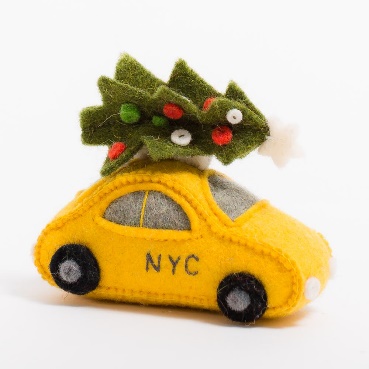
Craftspring sells hand-embroidered felt ornaments and toys made by Kyrgyz women artisans, using locally-sourced merino-wool felt. The product range — about 500 SKUs — includes US-themed ornaments (New York taxi, San Francisco trolley, the late Justice Ruth Bader Ginsburg), internationally-themed gift items, kids’ toys, and ornaments for the seasonal gift market. By the time of the research, Craftspring’s Etsy shop had logged 16,981 individual sales, carried 3,435 five-star reviews, and 3,412 customers had bookmarked it as their favourite shop. The company also wholesaled to 250-plus US and international retailers.
The Craftspring model is not extractive in the colloquial sense. It pays the artisans, it maintains long relationships with them, and the founder is explicit in her own brand language that the goal is to keep traditional Kyrgyz crafts alive by giving them an export market. What it shows is that the commercial value-capture of an international Kyrgyz e-commerce sale, at scale, accrues to whoever holds the marketplace storefront — and that has not, structurally, been a Kyrgyz entity. The slippers cross the border. The retail margin does not.
The company is the clearest example of what cross-border craft collaboration at scale looks like when one side has the production and the other side has the platform access. What this research surfaces is not a reason to blame the model — but a reason to ask whether a Kyrgyz entity could, in time, hold both sides of it.
There are several other companies in the same shape — German-Slippers.com out of Germany, smaller US-based merchants on Etsy — but Craftspring is the largest and the most visible. Their financial-information record, Etsy sales history, and wholesale distribution footprint all check out independently.
Three: visibility, not capacity, is the binding constraint inside Kyrgyzstan
I checked the websites of the Kyrgyz handicraft companies that did have a direct online presence — Tumar Art Group (tumar.com), the Handicraft Council site (handicraft.kg), Imperia Suvenirov (is.kg), Aizada Imports, Datka, and a handful of others. The platforms were built on Tilda, WordPress, and Bitrix. Most had no functioning international payment integration, no automated shipping-cost calculation, and limited search-engine optimisation for English-language buyers.
Pr-cy.ru, the website-monitoring service used to cross-check the traffic numbers, reported that these sites received fewer than 2,000 monthly unique visitors each. The 2019 industry average e-commerce conversion rate for arts and crafts categories was 4.01 percent. Multiplying out, a Kyrgyz handicraft website with a thousand monthly visitors generated, on average, around forty sales leads — and a much smaller number of completed purchases. The cost of getting the website set up was not the constraint. The constraint was getting it found.
Tumar Art Group is the largest single Kyrgyz handicraft producer with international reach. By 2021 they had B2B distribution relationships in multiple countries and a domestic retail network. They are the closest equivalent inside Kyrgyzstan to the value-capture function that Craftspring performs in New York — and even they were running on a website measured in low thousands of monthly visitors, not millions.
What buyers were actually searching for in 2021
Pinterest is where consumer trend formation for craft and home categories is most legible, and the 2021 Pinterest data carried a clear signal for anyone selling textiles, felt, and handmade homewares.
Sky-blue was the defining colour of 2021 on Pinterest — searches for sky-blue interiors, sky-blue textiles, sky-blue accent pieces spiked in the first quarter of the year. Kyrgyz producers whose felt palette ran to natural creams, traditional reds, and dark blues had a direct connection to this moment with minimal adjustment.
The cloffice trend — converting a wardrobe alcove or closet space into a compact home office — had generated more than four hundred thousand searches in the months before the research window. Felt wall panels for sound absorption, fabric organisers, handmade desk accessories: these are the product adjacencies a Kyrgyz felt producer could reach without redesigning their core production.
Outdoor themes had arrived at scale: camping, hiking, national park road trips, van life. The Pinterest audience looking for outdoor accessories, felt camp blankets, and handmade trail gear in early 2021 was larger than the audience that would have appeared in 2019. Kyrgyzstan’s merino-wool felt product line is a natural fit for this moment — the material is premium, the origin story is strong, and the product category is actively being searched for by people who have money to spend.
The research noted this as a narrow window. Trend cycles on Pinterest move fast. But in the first half of 2021, the alignment between what Kyrgyz felt producers make and what Western buyers were actively searching for was tighter than it had been in years.
What the textile industry looked like, side by side
The textile and apparel sector was a different shape. Garment manufacturing represented three percent of total Kyrgyz industry as of end-2019, with $150-million-plus annual exports, concentrated geographically in Bishkek (29%), Jalal-Abad (28.5%), Chui (23%), and Osh (17%). The factories specialise in cut-trim-make production for Russian fast-fashion brands — plus-size women’s clothing, women’s and kids’ dresses, and socks were the standout categories.
The sales channel was very different from handicrafts. Textile factories sold predominantly B2B into the Dordoi clothing bazaar in Bishkek, from which Central Asian wholesalers bought and redistributed across the region. The online presence was largely on Russian-language B2B classifieds — optlist.ru, optom-plus.ru, postavshhiki.ru, Qoovee — with corporate websites hosted in the .ru domain zone, mobile-friendly, properly SEO-optimised for the Russian-speaking market. By early 2021 a small number of Kyrgyz textile manufacturers had started listing on Wildberries and Ozon. Most had not yet.
The constraint here was different from handicrafts. For garments, the payment rails to Russia work fine. The binding limitations were brand visibility on the major Russian marketplaces, the operational learning curve of running a marketplace listing — image quality, customer-response timing, returns handling — and the fact that Kyrgyz factories had historically optimised for wholesale-to-Dordoi rather than direct-to-marketplace. A factory that sells through Dordoi cannot easily list on Wildberries the same week. Different unit economics, different photography, different SKU management.
What the report recommended, and what the research could not solve
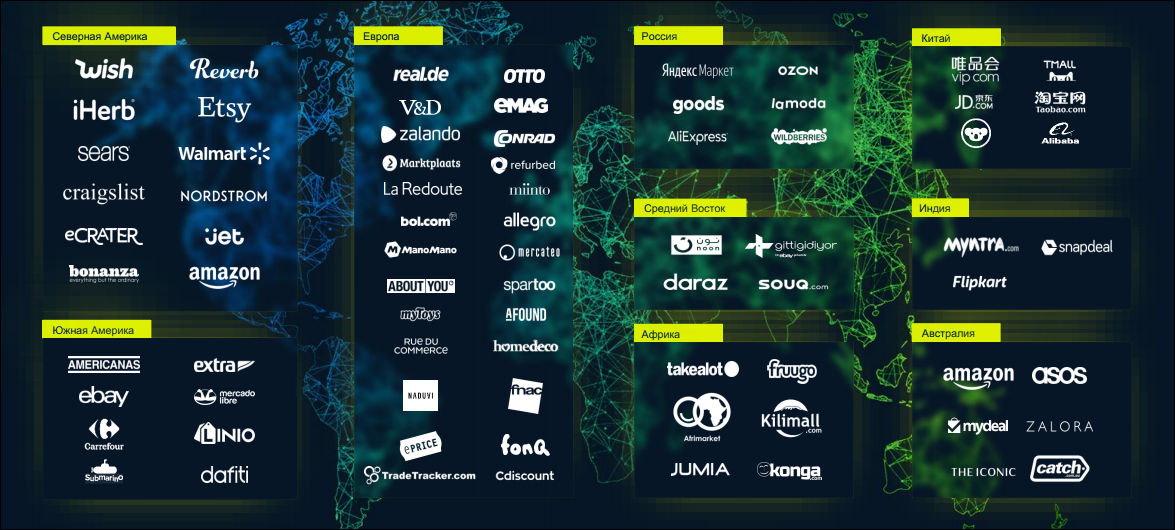
The final report concluded with a priority-market matrix. For handicrafts, the recommended channels were B2B platforms targeting US and EU retail chains — FashionGo, Foursource, FashionTIY — the marketplace channel in Russia through Wildberries, Ozon, and Yandex Market for the textile side, and domestic visibility through Svetofor, Lalafo, and Instagram for the consumer and B2C local layer.
The matrix told a clear story: the platforms are open, the categories are demonstrably profitable, the competition is fierce but not saturated. What the matrix could not solve, and what the report acknowledged explicitly, was the upstream constraint — the payment rail. Until the National Bank’s foreign-fintech rules changed, or until enough international platforms set up local Kyrgyz settlement infrastructure, the catalogue would continue to be sold by intermediaries based in places where the rails worked.
That is not a finding the research could deliver. It is a policy question.
What the research can deliver is the diagnostic: Kyrgyzstan has the products. The international marketplaces have the demand. The catalogue already exists, and is already selling — under someone else’s storefront. The next step for the Ready4Trade programme is to figure out how to move the storefront, gradually, back inside the country where the products are made.
That work starts with the national coach programme that ITC is now running. The research was the first chapter. The training is the second.
— Aziz Soltobaev, KG Labs, September 2021.