
Strategy · IT Sector · Central Asia
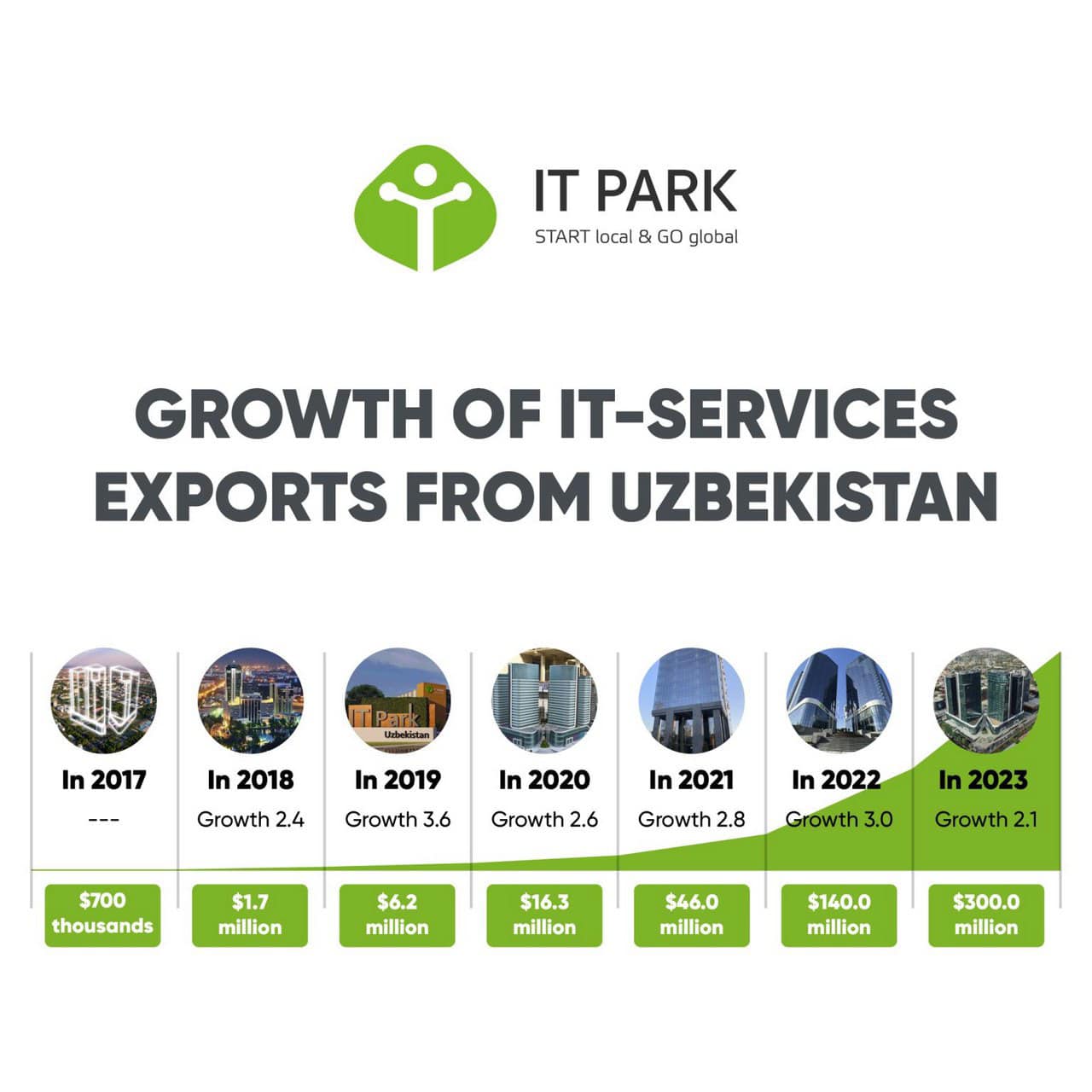
In 2022, Kyrgyzstan’s Park of High Technologies — founded in 2013 — produced $30 million in revenue. Uzbekistan’s IT Park — founded in 2019 — produced $140 million. The gap is not population. It is the answer to the question ‘which languages for which markets for which employers?’
2023-04-10 · Aziz Soltobaev · KG Labs Foundation
In 2022, Uzbekistan’s IT Park — founded mid-2019, so three full years of operation — produced revenue of one hundred and forty million US dollars. The Park of High Technologies of the Kyrgyz Republic — founded in 2013, so nine full years of operation — produced thirty million US dollars in the same year. The gap is not subtle.
I want to write this one as a short, sharp piece, because the diagnostic is short and sharp. Country size matters. Available labour pool matters. But the difference between $30 million in nine years and $140 million in three years is not explained by either. It is explained by a piece of strategy work that Kyrgyzstan has not done and Uzbekistan has.
The conversation that triggered this post
Recently, a venture capital investor from South-East Asia visited Bishkek. He was — by his own account — genuinely impressed with the talented people he met inside the Kyrgyz IT community, and he was impressed with the ambition of the announced national programme to prepare fifty thousand programmers.
He was also visibly frustrated. He could not get answers to a set of clarifying questions that, from where he sits in the regional investment landscape, are the bare minimum for taking a national IT strategy seriously:
- Which programming languages, specifically, are the fifty thousand to be trained in?
- For which target markets — domestic, regional, EU, US, Russian-language CIS, Middle East?
- For which potential employers — outsourcing shops, product companies, local start-ups, multinational regional offices?
- What is the answer if the world’s tech labour demand shifts in the next eighteen months?
He compared the conversation to ones he had had in Malaysia and Singapore. In those countries, the national IT strategy for talent preparation has a clear position on both the supply side and the demand side: not just who is being trained, but who is being trained for whom. The strategy document names target employers. It names target markets. It names the contractual mechanisms through which graduating cohorts move into those markets. The supply curve and the demand curve are designed together.
His point, in plain language, was that without that demand-side specificity, the supply-side ambition of «fifty thousand programmers» produces a workforce that does not match where the jobs actually are. The graduates emerge. The market does not absorb them. The salaries flatten. The best leave for Russia, the EU, or the Gulf. The accelerator funnels that the Park of High Technologies was supposed to feed into never reach the volume the strategy projected.
What Uzbekistan got right that Kyrgyzstan has not
I do not have an inside view of every choice the Uzbek IT Park leadership made between its founding in 2019 and the 2022 revenue figure. But the visible differences in approach, from outside, include:
- A clear focus on outsourcing services to specific foreign markets (CIS, EU, US) with named target customer profiles, not «anyone who hires programmers.»
- A residency-style programme that gives foreign IT companies legal, tax, and procurement preferences for setting up Tashkent offices, which then becomes the demand-side anchor for the training programmes.
- A funded, structured English-language uplift programme for the technical workforce, recognising that the demand-side markets they target operate in English.
- A direct partnership track with the largest CIS-region tech buyers, particularly Russian-language CIS and Gulf-region demand, where Tashkent’s geography and labour costs give it a real edge.
Each of those is a strategy choice. None of them is impossible to replicate in Bishkek. None of them requires Kyrgyzstan to pretend it has Uzbekistan’s population scale (it does not — Uzbekistan has roughly five times Kyrgyzstan’s population). What they do require is a national position on which markets we are training programmers to sell into.
The argument I want to make
The Kyrgyz IT community needs sharper answers to these questions than it currently has. I will not pretend I am the right person to write the answer to all of them. But the question is sound, and the longer we operate without an answer, the longer the gap between thirty million and one hundred and forty million grows.
The Park of High Technologies has talented residents. KG Labs has worked with many of them through hackathons, acceleration programmes, and mentor sessions across the last decade. The talent is not the bottleneck. The bottleneck is the absent demand-side strategy that would turn the talent into a portfolio of products, services, and employer relationships that the country could grow on top of for the next decade.
That strategy work has to happen. It will not write itself. The next investor through Bishkek will ask the same questions the South-East Asian one asked, and we will give the same incomplete answers, unless somebody — government, private sector, civil society — sits down and produces the document the investor was looking for. I think that document should exist by the end of next year. I would rather help write it than read about it not having been written.