
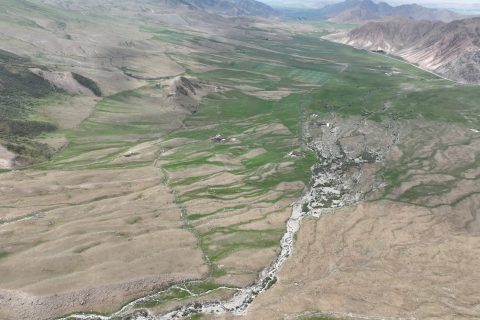
Climate · Glacial Lake Outburst · Issyk-Kul
On 21 August 2024, the high-altitude lake Zyndan-West, in the Tong district of Issyk-Kul oblast, breached. Six hundred residents of Tuura-Suu were evacuated. We had been on the ground scouting the same lake for our sensors a few weeks earlier. The Ministry of Emergency Situations has now asked for the install by mid-September.
2024-08-22 · Aziz Soltobaev · KG Labs Foundation
The more I travel around the country, the more I see how beautiful nature in Kyrgyzstan really is. The mountains, the lakes, the rivers, the valleys, the gorges. Especially in a year of stable weather. This is not that year.
Each spring and summer month of 2024 in Kyrgyzstan, and around the world, set absolute temperature records. The local effect of that is more debris flows, more mudflow, more glacial lake outbursts taking out pastures, washing roads, and partially flooding villages. In Kyrgyzstan the number of mudflow events this season exceeded the previous year’s total by a factor of six.
On 21 August 2024, the high-altitude glacial lake Zyndan-West, in the Teskey-Alatoo range of the Tong district of Issyk-Kul oblast, breached. The mudflow ran down into the pastures and across three roads. Six hundred residents from villages below, including Tuura-Suu, had to be evacuated.
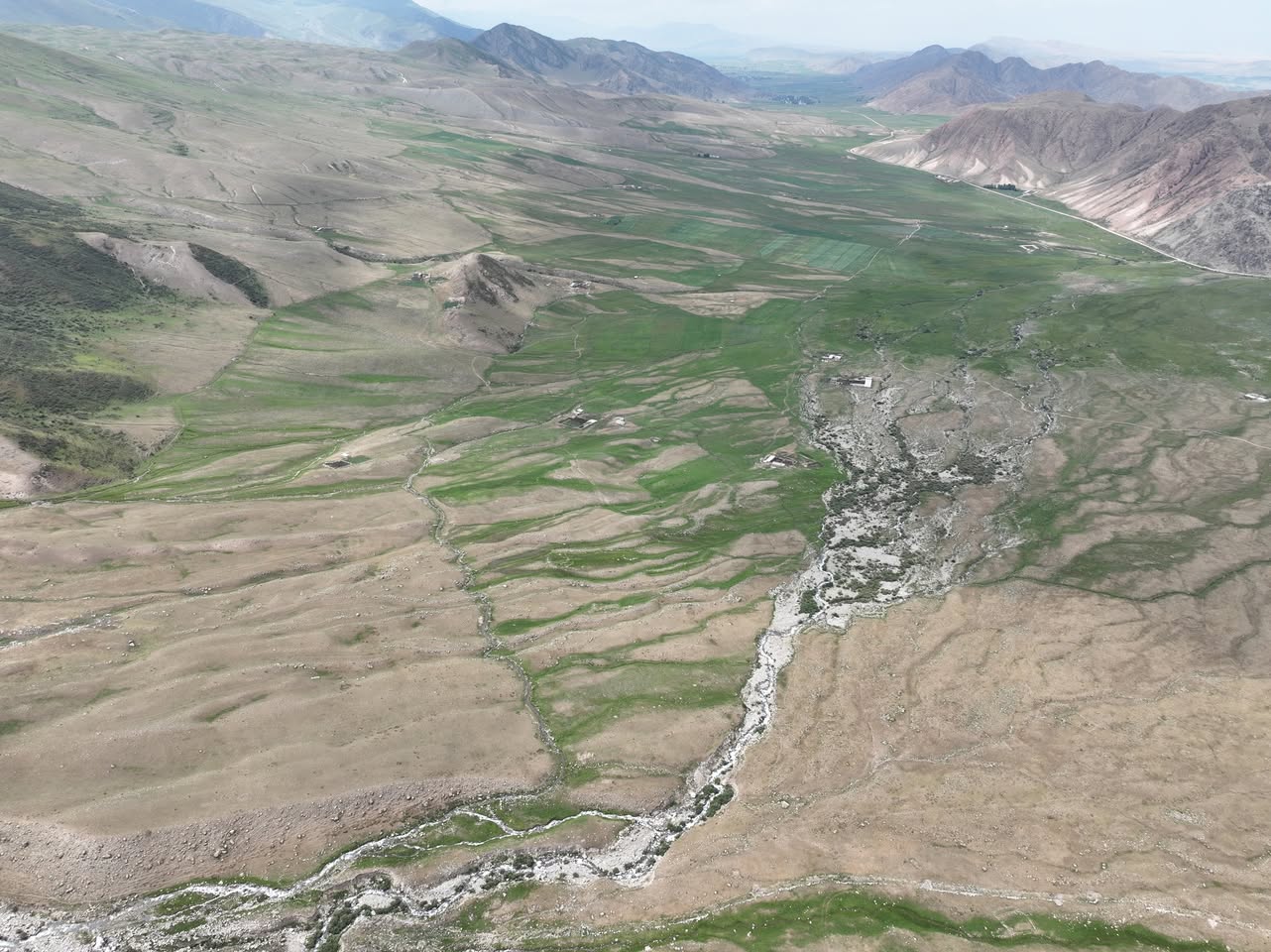
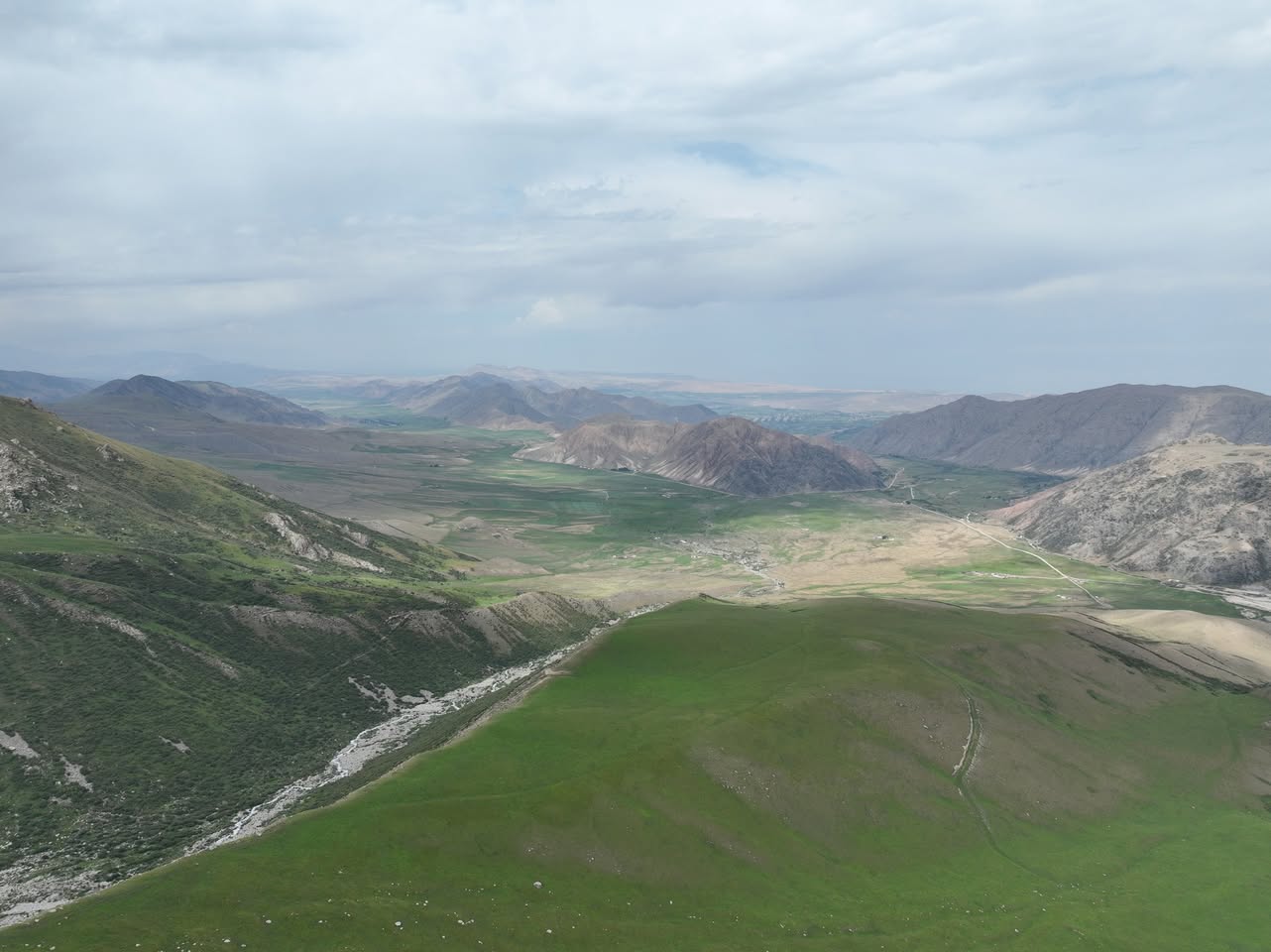
Where we had just been
What is unsettling about this particular event is that we had been at this lake a few weeks earlier. We were scouting it for an installation of our internet-of-things sensors — sensor mounts on the lake’s outlet, an early-warning notification path for downstream villages. We were in the area to choose mount points.
Most of the local residents of Tuura-Suu did not know the lake was there. Zyndan-West is about ten kilometres from the village, but it does not appear on Google Maps — that section of mountain is shown as glacier, because the lake is a recent feature. The reason it has begun to show clearer outlines in summer is the rise in global temperature. The glacier above it is receding. The lake is filling. The footprint that did not exist twenty years ago is now there in late-summer satellite imagery.
The institutional name for this is a glacial lake outburst flood — GLOF. The lived experience is six hundred people being moved from their homes overnight.
The work that was already running
Internet Society Kyrgyz Chapter is in the second year of a project that uses internet-of-things sensors and LoRaWAN data transmission to monitor natural hazards. The pilot installations — automated meteorological stations and various additional sensors — have built up enough of a dataset that for some sites we can now act on the readings.
On the Boom Gorge specifically, we now have a clear picture of which factors precede the kind of mudflow event that closes the main road between Bishkek and Issyk-Kul. With those factors in hand, the warning window is hours rather than minutes. We have configured an alert path to the people who need to make the calls — through several channels of communication so the message gets through even if one channel is down.
What was missing on Zyndan-West, in August, was that we were not yet at this lake. We were on our way.
What the Ministry has asked for
Following the breach and the flooding of the villages below, the Department for Forecasting Emergency Situations at the Ministry of Emergency Situations has asked us to install meteorological stations and sensors at the Zyndan-West site by mid-September 2024. We are accelerating to meet that.
The decision-making chain looks straightforward when you write it like that. In practice, the lesson from this event is that the chain has to be built before the event, not after. Six hundred people were moved because the lake was not on the observation grid. The grid is on a slope of fifteen high-altitude sites that need to be covered. The hardware exists. The communications path exists. The institutional permission to install at the next site exists at this point because the previous site’s data has been accepted. What is being raced against is the climate.
Videos and press around the event
For the Zyndan area itself:
- https://www.youtube.com/watch?v=ywGhURS77wg
- https://www.youtube.com/watch?v=XGQRNsOOMzQ
- https://www.youtube.com/watch?v=h3_UHqCM8bA
Press coverage of the breach and the evacuation:
- Turmush: https://www.turmush.kg/ru/news:2152142/?from=kgnews&place=maincats
- Kaktus Media: https://kaktus.media/doc/507742_v_mintranskome_rasskazali_o_sityacii_v_zone_proryva_ozera_zyndan_video.html
- Vesti.kg: https://vesti.kg/proisshestviya/item/128373-proryv-vysokogornogo-ozera-na-issyk-kule-evakuirovano-naselenie-tuura-suu-video.html
What this season tells us about the next one
Climate change does not change global averages in a way that you can feel directly. It changes the variance. The microclimate around the bowl of Issyk-Kul, for example, behaves differently from the climate of the mountains that surround the lake at a distance of five to thirty kilometres from the shore. The telemetric devices installed along the lake shore tell us almost nothing about what is happening upstream, in the headwaters, where the lakes that breach are sitting.
For monitoring those high-altitude rivers and predicting the natural events that come down them, we installed a new set of telemetric sensors in the upper reaches of the Ak-Sai river in Tong district last week. The data transmits over LoRaWAN even where the cellular signal is weak or absent. The collected data feeds analytical models for the MES, the Academy of Sciences, and CAIAG, and powers a simple Telegram-based early-warning system for the roughly five thousand residents of Ak-Sai and Eshperovo villages.
The next step is making the warning hyperlocal. Predictive models using AI on the upstream sensor stream should give us a window measured in hours, per village, not per region. The thanks for fast-tracking this work go to the local administration of the airyl okmotu and to the Tong district representation of the Ministry of Emergency Situations, plus the Department of Monitoring and Forecasting of Emergency Situations at MES KR centrally.
Six hundred people. Three roads. Pastures that did not need to be lost. Sixteen lakes we have not yet reached.